Sunday, March 15, 2015

My Journey to Metaphysical Thinking (Part 4)

Know Thyself

“Imagination is more important than knowledge. For knowledge is limited to all we now know and understand, while imagination embraces the entire world, and all there ever will be to know and understand.”
Albert Einstein

First few years of school were in fact a traumatic and confusing time. It was a time for which I was constantly looking inwardly to seek out answers to my questioning and an understanding of why did my universe behaved the way that it did, because my physical stimuli was rather confusing and at times traumatic. It was in the time of Kennedy, the Cuban Missile Crisis, duck and cover drills at school, and a civil defense shelter directly behind where I lived on Plantation Drive at the Navy Base in Perl Harbor, HI.  I was four years old at the time I started school, and had only really had enough knowledge of the world to remember the simple things that made me happy and began to formulate what love meant. 

Previously in this blog, I spoke of the battery of test I given before I attended the public, Pearl Harbor Kia Elementary School, but this was not the first school which I attended.  As I explained before the dogma of my mother’s religious faith required that I be taught religiously the Catholic Church, so I was enrolled into a catholic school, but this was only for a short period.  I was confused and remember very little about this time, but for the day I started and my final day of attendance.  I was a very regimented experience which included nuns and uniforms.  This was important to my mother, because her father had immigrated from Ireland, with his sister who was actually a nun, and so it was imprinted on me as to the importance of it.


My father, as with most military parents, missed out on several critical moments in my young life, but I do remember that he was there when I began at the public elementary school, which was a few steps from where I lived and my peers were all children of U.S. Military, and primarily Navy.  I remember only a few things about this experience as well, but there was far less about God and prayer here.  However on my first day, I can remember that not only remember how reciting the pledge of allegiance was emphasized as being hugely important, but also an after school incident where a boy ‘borrowed’ my new lunch box and used it to fight with a girl thus breaking the glass insulator of the thermos.  This was a very different environment than the one which I had previous introduced to, and the fact that I now had a broken thermos of which I was entrusted to take care of, made this a very unhappy experience and overall a traumatic day.


It was Socrates, one of the founders of western philosophy, which first spoke of morality and ethics, and many of his thoughts were given to the world in Plato’s Republic.
Many of the beliefs traditionally attributed to the historical Socrates have been characterized as "paradoxical" because they seem to conflict with common sense. The following are among the so-called Socratic paradoxes:


  • No one desires evil.  
  • No one errs or does wrong willingly or knowingly.  
  • Virtue—all virtue—is knowledge.  
  • Virtue is sufficient for happiness. 

The term, "Socratic paradox" can also refer to a self-referential paradox, originating in Socrates' utterance, "what I do not know I do not think I know", often paraphrased as "I know that I know nothing."  Socrates believed wrongdoing was a consequence of ignorance and those who did wrong knew no better.  The one thing Socrates consistently claimed to have knowledge of was "the art of love", which he connected with the concept of "the love of wisdom", i.e., philosophy. He never actually claimed to be wise, only to understand the path a lover of wisdom must take in pursuing it. On the one hand, he drew a clear line between human ignorance and ideal knowledge; on the other, he describe a method for ascending to wisdom.[1]

So if virtue is knowledge,to have the knowledge of how we should live our life, people must learn it by being taught.  By knowing what to do, then we’re to practice what we know. But saying the words 'I know,' we often are just lying to ourselves, and wrongfully believe that we have knowledge in something for which we actuality do not. Socrates taught that to "know thyself" is to know the excellence that is proper to man, and to live in accord with that knowledge is wisdom and the good for man.


He also taught that Justice and every other form of Virtue is Wisdom. For just actions and all forms of virtuous activity are beautiful and good. He who knows the beautiful and good will never choose anything else. And, it is the wise that do what is beautiful and good, over the unwise who are ignorant of what is beautiful and good cannot do these things and fail if they try.  Therefore since just actions and all other forms of beautiful and good activity are virtuous actions, it is clear that Justice and every other form of Virtue is Wisdom.[2]


However there is a cognitive bias which effects wisdom, in that unskilled individuals suffer from illusory superiority, mistakenly assessing their ability to be much higher than is accurate.  This bias is attributed to a metacognitive inability of the unskilled to recognize their ineptitude.  The name of this bias is Dunning–Kruger effect named for David Dunning and Justin Kruger of Cornell University.  They concluded that "The miscalibration of the incompetent stems from an error about the self, whereas the miscalibration of the highly competent stems from an error about others."[3]


Then there is the aphorism of Albert Einstein that states "As our circle of knowledge expands, so does the circumference of darkness surrounding it." Albert Einstein was a scientist who sought out answers in nature to the mysteries of the universe.  It meant that even though our knowledge is expanding exponentially, our questions are expanding exponentially faster. Although Knowledge is the antonym of ignorance, Einstein's statement refers to the Expansion of Ignorance.


The ignorance is studied even further by Agnoiology, the doctrine concerning those things of which we are necessarily ignorant, which describes a branch of philosophy studied by James Frederick Ferrier in the 1850s. Ferrier's matured philosophical doctrines find expression in the Institutes of Metaphysic the Theory of Knowing and Being (1854), in which he claims to have met the twofold obligation resting on every system of philosophy, that it should be reasoned and true. His method is that of Spinoza, strict demonstration, or at least an attempt at it. All the errors of natural thinking and psychology must fall under one or other of three topics: Knowing and the Known, Ignorance, and Being. These are all-comprehensive, and are therefore the departments into which philosophy is divided, for the sole end of philosophy is to correct the inadvertencies of ordinary thinking.

In Ferrier's Agnoiology or Theory of Ignorance, he claims that there can be an ignorance of that of which there can be no knowledge. It is corrected by appealing to the fact that Ignorance is a defect, and argues that there is no defect in not knowing what cannot be known by any intelligence (for example, that two and two make five), and therefore there can be an ignorance only of that of which there can be a knowledge, that is, of some-object-plus-some-subject. Therefore the knowable alone is the ignorable. Ferrier lays special claim to originality for this division of the Institutes.[4]

Karl Popper, one of the greatest philosophers of science, stated that, "Our knowledge can only be finite, while our ignorance must necessarily be infinite." Karl Popper to conclude that what were regarded as the remarkable strengths of psychoanalytical theories were actually their weaknesses. Psychoanalytical theories were crafted in a way that made them able to refute any criticism and give an explanation for every possible form of human behavior.[5]


Ultimately we are taught about God, whether it is from our religious beliefs or from seeking knowledge through Epistemology. Epistemology questions what knowledge is and how it can be acquired, and the extent to which knowledge pertinent to any given subject or entity can be acquired. James Frederick Ferrier in his Institutes of Metaphysic: The Theory of Knowing and Being was the first to speak of this study. I know now that my knowledge of God began with the faith of my parents, but it was through being taught of the physical universe and the nature of it, and I have evolved into seeking the truth of God’s Metaphysical Existence through Epistemology.[6]

So it is because of my ignorance that I seek the proof of God’s Metaphorical existence through Epistemology and that has made me an Infidel.  And I am truly sorry if this is offensive, because you choose to accept what you believe to be the truth about God is different than what I’m willing to accept due to what I can see in the nature of the universe.  It only means that I have been become more Ignorant due to those philosopher which have enlighten me to see the truth of the universal nature of existence, and you should not hate me for it, because I am able to see God from this much more philosophic way.

I truly wish that everyone could see God from my point of view, for it is beautiful and harmonious.  I am not a teacher, only a disciple of leaning from the greatest men of history of the nature of the universe. It is often clear to me that the dogma of religion has the capability of influencing an individual to perceive God's will in a false way and which metaphorically opposed to the philosophic truth. But if your religion forces you to hate me because I’m an ignorant Infidel, than you may not be as knowledgeable as it is necessary in your expansion of ignorance to see God as he truly is.

You are born to be different, and what you believe to be true is different than my belief.  However, it wholly because of the randomness in the universe which clouds our perception, and makes our views so distorted.  And, until you are able to accept the flaws in your natural perception, you will continue to hate, and not feel the love of God as I do.  God's love transcends us all.

I don't fault you for seeing in things in a more epicurean nor in a fundamentally extremely way, but hope that you will find some truth in my philosophically metaphysical retrospection.

God doesn't hate, people do.

I thank the reader again for their time and consideration.  God bless you with health and happiness.

References


1  "Socrates." Wikipedia. Wikimedia Foundation. Web. 14 Mar. 2015. http://en.wikipedia.org/wiki/Socrates.

2  “Wittgenstein's Logic of Language” Web. 14 Mar. 2015. http://www.roangelo.net/logwitt/logwit61.html.

3  "Dunning–Kruger Effect." Wikipedia. Wikimedia Foundation. Web. 14 Mar. 2015. http://en.wikipedia.org/wiki/Dunning–Kruger_effect.

4  "James Frederick Ferrier." Wikipedia. Wikimedia Foundation. Web. 15 Mar. 2015. http://en.wikipedia.org/wiki/James_Frederick_Ferrier.

5  "Karl Popper." Wikipedia. Wikimedia Foundation. Web. 15 Mar. 2015. http://en.wikipedia.org/wiki/Karl_Popper.

6  "Epistemology." Wikipedia. Wikimedia Foundation. Web. 15 Mar. 2015. http://en.wikipedia.org/wiki/Epistemology.

What Is The Speed of Dark?


Moving Illusions


What is Random?


Thursday, March 12, 2015

My Journey to Metaphysical Thinking (Part 3)


A Crucible of Learning


“To fall in love with God is the greatest romance; to seek him the greatest adventure; to find him, the greatest human achievement.”

Augustine of Hippo


I can remember that shortly prior to attending school, I was given a battery of tests that tested both my knowledge of the physical world, and my mental state of mind.  I remember being given the Rorschach inkblot Test and it was in my mind the most upsetting test I had because I could not understand what they expected me to see in the rather meaningless blobs of ink. And, I quickly realize that I could not describe them comfortably, it was not going to be a true representation of how intelligently I felt. 

Here I was, in front of a total stranger who wanted to see, if I were normal, and insisting that there were no wrong answers, but I knew in my mind that this was not the truth, because my young intelligence told me that if the answers were not to be wrong, than why even ask them in the first place.  Why not ask me to draw pictures instead?   I remember seeing angels, butterflies, animals, and moths, for which I was told that I was normal. But, this experience disturbed me so much that I was prompted me to talk to my mother later about it, and it continued to haunt me for some time afterwards.

Although I was too young to understand, I was curious about why I was being given such a test as it was like being asked to speak of an image which I might only envision while I slept.  I understood even then that this stranger was trying to determine what type of metaphysical soul I possessed, and whether it posed a danger to myself and to others.  Whether I had disturbing thoughts or not, but this test inadvertently created a chaos in my mind which gave me nightmares, and a disharmony that I could not readily resolve.  It was a frightening harbinger of things to come, and it took some time for me to reconcile the event.  You may not feel that this was cruel, but this was a rather antiseptic experience which had no enriching effect on me and harsh to my self esteem.

Galen of Pergamon was the first well known physician to speak of the mind–body problem, a philosophy which examines the relationship between mind and matter, and in particular the relationship between consciousness and the brain.  The problem was famously addressed as well by René Descartes in the 17th century, resulting in Cartesian dualism.  Galen proposed organs within the body to be responsible for specific functions and these functions contributed to the functioning of the individual organism as a whole, rather than individual parts. He’s book, On the Diagnosis and Cure of the Soul’s Passion, contained how to approach and treat psychological problems.   In his treatise, On Diagnosis from Dreams (De Dignotione ex Insomnis Libellis) he describes that dreams, may mirror the conditions of the body.[1]

Psychologist today now know that our sleeping sub consciousness can have a profound physical effect on our overall health.  A calm harmonious soul is beneficial to restful sleep and our physical bodies ability to recover and rejuvenate.  Galen is seen as the most prolific writer of philosophy in pre-modern times, a more voluminous amount of works than even that of Augustine of Hippo.   Psychologist have established that the transition from a state of sleep to wakefulness, or in the inverse process of falling asleep, was associated with alterations in the synchronization of discharges from the brain stem reticular formation to the cerebral cortex.[2] 

These discharges were seen by the use of an EEG (electroencephalogram) and categorized by researchers in the 1930's and 40's into 4 fundamental types of brain waves:

- Delta waves (below 4 hz) occur during sleep

- Theta waves (4-7 hz) are associated with sleep, deep relaxation (like hypnotic relaxation), and visualization

- Alpha waves (8-13 hz) occur when we are relaxed and calm

- Beta waves (13-38 hz) occur when we are actively thinking, problem-solving, etc.

A chaotic brain becomes stuck and unbalanced, which can be calmed through increasing the flexibility and resilience of the brain.  Many psychologist use neurofeedback and hypnotism to accomplish to unstick a brain, but you can also use meditation and metaphysical philosophy to accomplish this as well.[3]  There 6 types of problems tend to create a chaotic pattern in our brain's activity that is hard to shift; Injury, Medications, (including alcohol), Fatigue, Emotional distress, Pain, and Stress.  Neuroscientist also know that our brains are very active when we sleep, and it is due to a deep sleep called REM, the most active of all the sleep stages where we spend about 20 percent all states dreaming.[4]  Nightmares can have physical causes such as sleeping in an uncomfortable or awkward position, having a fever, or psychological causes such as stress, anxiety, and as a side effect of various drugs, and a chaotic brain may directly contribute to our nightmares. A lack of a consistently sufficient amount of REM will have a damaging effect on the heath of our brains[5]

The term meditation refers to a broad variety of practices that includes techniques designed to promote relaxation, build internal energy or life force and develop compassion, love, patience, generosity and forgiveness. Meditation often involves an internal effort to self-regulate the mind in some way. Meditation is often used to clear the mind and ease many health concerns, such as high blood pressure, depression, and anxiety.  And it is my belief that a metaphorical or scientific thinker uses a form of meditation called Mindfulness which attempts to find harmony in their chaotic mind, and bring their souls in closer harmony with the universe.[6]


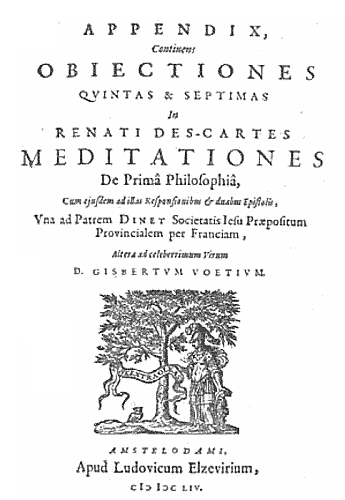
For example, Philosopher René Descartes first published a treatise in 1641 entitled Meditations on First Philosophy where he spent six days in retrospective writing six meditations were he first discards all belief in things which are not absolutely certain, and then tries to establish what can be known for sure. It was Descartes’ effort to present his metaphysical system in its most detailed level and in the expanding of his philosophical system.[7]

Often for me this type of meditation does not require sleep, but can be achieved just by walking or having a focus of mind in solitude which allows it to reach a state of imagination where the metaphysical mind can see the proof to a problem and the harmony of its truth.  A waking dream state where I can sense the full beauty of the universe, and reveal with infinite clarity what is true. I can see the true that I have practiced Descartes form of meditation for time and it gives me a peacefulness that would not be possible if I did inward refection to reason out as to the why of things.  And, I have become much more harmoniously at peace with the universe today due to my understanding of physical nature of the world, and metaphysical nature of  God, whom I can now sense does exist in harmony to the known universe.

And I feel that it is because of this metaphysical clarity, that my mind rarely becomes chaotic. I never seem to have a headache for any reason now, and I can sleep with greater depth and peaceful rest today, than I have ever experienced in my past.

I thank the reader for their time and consideration. God bless you with health and happiness.


References


1  "Galen." Wikipedia. Wikimedia Foundation. Web. 12 Mar. 2015. http://en.wikipedia.org/wiki/Galen.

2  "A History Of Sleep Medicine." Internet Scientific Publications. Web. 12 Mar. 2015. https://ispub.com/IJN/9/2/8253.

3  "Exploring the Brain and Brain Waves." Exploring the Brain and Brain Waves. Web. 12 Mar. 2015. http://www.brainandhealth.com/Brain-Waves.html.

4  "Brain Basics: Understanding Sleep." : National Institute of Neurological Disorders and Stroke (NINDS). Web. 12 Mar. 2015. http://www.ninds.nih.gov/disorders/brain_basics/understanding_sleep.htm.

5  "Nightmare." Wikipedia. Wikimedia Foundation. Web. 12 Mar. 2015. http://en.wikipedia.org/wiki/Nightmare.

6  "Meditation." Wikipedia. Wikimedia Foundation. Web. 12 Mar. 2015. http://en.wikipedia.org/wiki/Meditation.

7  "Meditations on First Philosophy." Wikipedia. Wikimedia Foundation. Web. 12 Mar. 2015. http://en.wikipedia.org/wiki/Meditations_on_First_Philosophy.

Andy Puddicombe: All it takes is 10 mindful minutes


Tuesday, March 10, 2015

My Journey to Metaphysical Thinking (Part 2)


Finding the Truth about Reality


“If your ego starts out, 'I am important, I am big, I am special,' you're in for some disappointments when you look around at what we've discovered about the universe. No, you're not big. No, you're not. You're small in time and in space. And you have this frail vessel called the human body that's limited on Earth.”

-- Neil deGrasse Tyson


By the grace of God, I was born into an expansive universe that contained two nurturing parents who were devout Christian believers in the portion of this world called Earth that is known as the religiously free and peaceful nation of the United States.  And although you may argue this philosophical point of view, I feel that I was truly blessed to see God from a much different perspective than a person who had the misfortune to have been born into one of the oppressive cultures like North Korea where the freedom of an individual’s soul is severely limited.  I am truly grateful for the freedoms endowed upon me by birth in this great country, and instilling in me the confidence I have in knowing that I can speak to you freely without the fear of tyranny nor the injustice of persecution.  And, I apologize to anyone who sees any unintended offence in my beliefs as I attempt to explain the philosophy behind them.

My parent’s were steadfastly Christian. My father, God bless his soul, was a military man who had a profound sense of duty and a deep seated spiritual belief, that was influenced by his mainly biblical up bringing and fellowship in the “Church of Crist.”  My mother, staunchly followed the ritualistic catechism of the Catholic Church and dogma of the Vatican’s Holy See in Rome.  To marry my father, my mother was required to uphold the obligation to preserve his or her own faith and “ensure the baptism and education of the children in the Catholic Church,” as set forth in the 1635 catechism.  


Although difficult for my father to accept, he agreed to this requirement, but frustratingly attempted to convert everyone of us to his faith through the reading of biblical scripture until we had departed into adulthood.  Although my mother remained steadfast in her belief, my father’s regular unattractive diatribe of scripture to shake any stronghold that our regular exposure to dogma may have had, it only managed to convert one daughter to eventually switch to his professed fellowship, but this may have had more to do with my sister’s experience in the military and her relationship with her husband.

So why have I gone into such detail about the beliefs of my parents?  From my first conscious moments, I was being indoctrinated into a Christian way of thinking, and it shaped the truth of what I felt that my reality was and what my imagination told me it was. Only after I could understand my the words of my English speaking parents could I begin to formulate questions about my existence, and attempt to understand the universe as the stimulus of my senses were telling me existed. And, it was early in my childhood that questioned the confidence I had in what I was perceiving to be truth was actually the reality of things. The first person to question our metaphysical thinking as to the realization of our existence in the universe was the philosopher René Descartes.


A rationalists such as Descartes often argues that certain truths exist and that the intellect can directly grasp these truths. They attempt to reason confidently that truth does not require physical proof nor evidence, and our senses could actually be lying to us.  When we have an irrational experience, we often find it hard to find the truth of it, and often discard this thinking as flawed.[1] Every time I was made to attended Church, I attempted to imagine God’s existence, but the more I was taught of the Bible, the more I was founding that I often questioning the rational thinking behind what my father was claiming as the truth.

How could I except that Christ walked on water, when by nature it is not physically possible? And, even through imagination, I could not accept this as being true. It was only recently through my philosophical research that a person’s metaphysical thinking can blind them to what their senses are perceiving to be true, and my perception of what is true can be altered through knowledge. What one person claims to be true could in fact be false in my knowledge of reality, but until that person has gained enough ration thought as their knowledge of the true proof of nature and the reality of the universe, they will never believe that their perception was flawed. But it was from my father’s faithful study of the bible that I could see the truth of scientific reasoning, and my parent’s religious beliefs helped be to understand the flaws in perception that exist through dogma.

Thus, I began at this early age to then process things from the realistic perception that is the base for Descartes's proposition of Cogito ergo sum.  And, is also this time that I began to see religion in the terms with which David Hume describes in his A Treatise of Human Nature.  And it was not long before I began to understand that no religion belief was more flaw than the other, and the dogma of each made them equally irrational.

I once again thank the reader for their time and consideration. May God bless you harmony in the universe.


David Hume (1711-1776)


References


1 "René Descartes." Wikipedia. Wikimedia Foundation. Web. 11 Mar. 2015. <http://en.wikipedia.org/wiki/René_Descartes>.


Monday, March 9, 2015

My Journey to Metaphysical Thinking (Part 1)


In the Begin There was Light

“One day, in retrospect, the years of struggle will strike you as the most beautiful.”


From my uneducated, but knowledgeable perspective, I can surmise that an unborn human fetus has a soul, but is not conscious of it at all until well after birth. To understand this concept, try to go back in your mind to your earliest childhood memories: Do you remember when you first tried to walk, but fell? Or the reaction someone gave you when you said your first words? Do you remember anything about the actually moment of birth?

So, you may have been conscious physically during these moments, but you just can’t remember these rather significant events in your life. And, you know that this is alright because it did actually happen whether you can remember it or not. At an early age you began remembering, but at an earlier age you were already expressing yourself to the world around you even though you had no knowledge of it. For most people this type of knowledge is a trivial, unimportant, and useless, but to the developing soul it is was very important. My point here is that; Just because you have no knowledge that something happened to you, such as being given a spirit, it doesn't necessarily mean that it didn't physically nor metaphysically happen.

So at birth, I have a spirit, which I am able to express to the world while I’m awake, but when I can no long stay conscious to the physical realm, due to the chemicals in brain triggering a relaxation and slow down in certain areas of our body’s activities, I fall asleep. Most individuals, although asleep to the physical world, are still conscious to the metaphysical realm, and we know this because we all have experience lucid dreams which we can remember. This allows our souls to continue to seek out harmony to problematic issues which have caused a chaos in our mind was away and fully functioning. Simply, dreaming is a way of shorting out problems when our bodies are at rest.

Psychologists for some time have been looking at what makes a person conscious, and one p
sychologist in particular developed an hypothesis which argues that the human mind once assumed a state in which cognitive functions were divided between one part of the brain which appears to be "speaking", and a second part which listens and obeys—a bicameral mind. [1] In 1976, a Professor at Princeton University, Julian Jaynes, presented this idea in his book The Origin of Consciousness in the Breakdown of the Bicameral. Jaynes argued that the change from bicamerality to consciousness (stemming from linguistic metacognition) occurred over a period of ten centuries beginning around 1800 BC, and that a bicameral mentality was the normal and ubiquitous state of the human mind only as recently as 3000 years ago.

Jaynes asserted that the self-awareness characteristic of consciousness as most people have today, was not generally experienced until roughly the times written about in Homer's Iliad. It was when man developed a bicameral mind that he first began to focus on the Metaphysical reality of God. This development of a bicameral mind is the same reason that you were not fully conscious in your early childhood. Jaynes’ bicameral mind hypothesis is a complex analysis of the cognitive awareness of what is conceived to be the metaphysical presents of God, and has been highly controversial.

The primary scientific criticism has been that the conclusions Jaynes drew had no basis in neuropsychiatric fact.  For example, it fails to explain one of the central mysteries of a disturbed mind, the madness of hallucinations.  But Jaynes has gained the support of many proponents for the idea that language is a necessary component of subjective consciousness and more abstract forms of thinking.  It has been said critically that Jaynes defines consciousness as "that which is introspectable." which similarly follows in the philosophic traditions of Locke and Descartes.

I believe that in order for a person to see the true beauty of things and see signs of God, that person must look inwardly in order that they may see the harmony that is brought to our souls through our five senses, our sub consciousness bicameral minds, and metaphysical nature of our universe. I believe that it is the feeling within our souls which give us the guidance for our belief in God, and it is only though being at harmony with the universe will your soul feel the touch of God, as I have.

I thank the reader for your considerate time and attention, and may God bless you for it.

References


1 "Bicameralism (psychology)." Wikipedia. Wikimedia Foundation. Web. 9 Mar. 2015. http://en.wikipedia.org/wiki/Bicameralism_(psychology)


Julian Jaynes and the Bicameral Mind Theory


Sunday, March 8, 2015

An Infidel's Quest to be in Harmony with the Universe.


About this Blog

"If you want the present to be different from the past, study the past."
--Baruch Spinoza


As I grow older, I find myself becoming more and more philosophic about life, humanity, and the true nature of God. I am but a simple man; who has become unbound from the dogma of a specific religion in my quest for the truth, and who has been greatly enlightened by the beauty of a God's metaphysical harmony with the universe as it has been made evident to me from the testimonies of the historically great philosophers. I believe that the reader of this blog will find that my views towards religion can be most closely aligned with the philosophy of Voltaire, but I am focused on thought and imagination like any other scientific mind like Einstein.  This blog will hopefully chronicle enough of my Pandeist thinking to enlighten the reader toward the truth of God's existence, and how the Universe is spiritually effected by him.

I do not attempt to change what you believe, because this has been with you from birth. I only want to give you the scope of my metaphysical knowledge of what God is, so that you may be enlightened by the truth of it. This has taken me many years of spiritual development and philosophic research to give me enough confidence and courage I have now to tackle such a difficult and controversial subject.

My remarks here are of my own free will, and are not intended to insult or offend any soul for their beliefs. I will always respect the beliefs of others, but you will find the absents of God in anything that is evil. He doesn't hate you because you choose to ignore the signs of his existence, but without God, there can be little harmony to the chaos which does exist within our universe. And, I believe that it is this spiritual Godlessness which can be attributed to our metaphysical blindness, and the breeding hatred within our souls.

I welcome any comment that doesn't come from an ignorant soul who may feel compelled by their hatred to rebut my spiritual thoughts or beliefs, and I may choose not to validate them by giving a affirmative replying. But, this doesn't mean that I will ignore them outright either. These are my rants and they are from my point of view. I honestly do not expecting anyone to agree with them, but I think there may be a few courageous souls that do.

God's existence may always be a mystery to many, but if you open your mind to the harmony of the universe, you'll see signs that God is truly everywhere in a purely metaphysical sense. And although not devoutly religious of it, I constantly feel as though my soul is being enriched each day, from my philosophical revelations, and the wonderment that is harmonious to the known universe. Although some may call this a religion, it will always be personally seen as just a philosophical doctrine in my view of our universe.

Thank you and may God bless any reader with a supporting point of view.

Will Durant---The Philosophy of Voltaire


Albert Einstein Documentary